


For modern people, one of the most common diseases of the musculoskeletal system, which is diagnosed not only in the elderly, is osteoarthritis.It mainly affects the lumbar region, which is often subjected to high loads, especially when walking, and the cervical region, affecting office workers and students.The chest area is less affected but also requires careful attention and timely initiation of treatment.
What is thoracic spondylosis?
The primary degenerative process (destruction, loss of initial function) occurs in the intervertebral discs, against the background of which secondary reactive and compensatory changes in the joints and ligaments gradually develop - this is how the diagnosis of "spondylosis" is understood in official medicine.This disease has a multifactorial (multifactorial) nature, first affecting the intervertebral disc (the formation of fibrocartilage tissue between the bodies of an adjacent pair of vertebrae), then:
- other parts of the spine;
- entire musculoskeletal system;
- nervous system.
Due to the structural characteristics of the chest area, the symptoms of the disease are similar to the clinical picture of diseases of the heart and respiratory system.Severe pain due to thoracic spondylosis occurs in stage 2, intensifies with physical activity and is not always evident in the back.List of symptoms for each level of the disease:
- Pain in the affected area or in the left chest area, similar to a heart attack: constant or sharp.Convulsive myoclonus.
- Sharp pain in the area below the shoulder blades, which may also appear between the ribs (intercostal nerves are affected), accompanied by a feeling of chest tightness.Tends to increase sharply when inhaling, turning, and bending the body.Increased discomfort occurs when maintaining an uncomfortable position for long periods of time.
- Sensitivity problems in the upper chest, abdomen, lower limbs, "goosebumps" appear - due to (cross) damage to nerve roots.Development of intervertebral hernia, limited movement due to kyphosis or scoliosis.
- Hypoxia, pulmonary congestion, other functional disorders of the respiratory system.Development of fibrosis, transition of degenerative-dystrophic processes to the structures surrounding the spine.The clinical picture is in remission (deterioration).
Continuous pain in the chest area appears with grade 2 osteochondronecrosis, which indicates the appearance of cracks in the fibrous ring and depression of the nucleus pulposus, which can lead to rupture of fibrous tissue and the formation of intervertebral hernias.In the clinical picture of manifestations of osteonecrosis, in addition to compression syndrome (due to compression of the spinal cord roots), reflex symptoms also appear:
- muscle tonic (muscle spasms lead to lack of oxygen and severe pain);
- neurological dystrophy (against the background of constant irritation of peripheral nerves due to muscle spasms, paresthesia occurs: feeling of numbness, "goosebumps", tinnitus, which intensifies when assuming certain body positions);
- vegetative-vascular (spasm of blood vessels in muscles, manifested by headaches, dizziness, dysfunction of internal organs and blood supply to the brain).
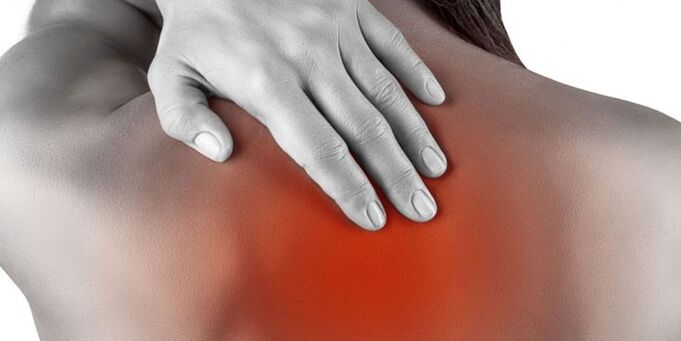
How to treat osteoarthritis of the thoracic spine
Most experts agree that the disease is closely related to upright posture and “spinal conditioning,” so it is partly natural to humans and mainly requires minimizing the number of growth factors.These include:
- physical inactivity (sedentary or sedentary lifestyle);
- Postural disorders;
- excessive physical activity, lifting heavy objects;
- nervous tension, tension;
- increased load on the spine due to wearing high heels and flat feet during pregnancy;
- lazy habits.
Treatment of osteoarthritis of the thoracic spine includes the removal of all of the above points: this will alleviate the patient's condition.It is also important to avoid hypothermia and not maintain an uncomfortable position for long periods of time.A very important nuance is the issue of physical activity: therapeutic exercises must be included in the schedule of a person with osteoarthritis, but at an early stage - under the supervision of a doctor.In addition, the treatment regimen includes:
- manual treatment (especially when there is curvature, blood flow is compressed, if the disease is caused by trauma);
- massage courses;
- swimming;
- physical therapy;
- acupuncture;
- Local and systemic drug effects.
There is no single treatment regimen for osteonecrosis.In some cases, it is important to take the correct position in bed, adjust the diet, and with grade 4 thoracic osteochondrosis, accompanied by complications (spina bifida, hemangioma), surgical intervention may be required.A precise treatment regimen is developed based on the patient's complaints and the diagnostic procedures performed.
At home
After receiving the results of diagnostic studies (X-rays are of particular importance), the doctor will choose the optimal conservative treatment regimen.All procedures are performed in the hospital (physical therapy, massage, acupuncture) and at home, the following are mandatory:
- Use local anesthetics and analgesics to relieve pain.
- Use products that improve the composition of cartilage tissue.Some doctors recommend taking additional vitamins to treat thoracic osteoarthritis (group B).
- Do daily therapeutic exercises.
- Watch your diet.

Treatment with medication
The use of local and systemic drugs is necessary both during remission and during periods of exacerbation.Drug treatment of osteoarthritis of the thoracic spine involves eliminating symptoms and influencing the degenerative process:
- Nonsteroidal anti-inflammatory drugs (NSAIDs), analgesics, analgesics - to reduce inflammation and pain.Ointments, creams, tablets are used.
- Muscle relaxants and antispasmodics - reduce muscle or blood vessel spasms.
- Chondroprotectors - glucosamine or chondroitin preparations, restore cartilage tissue.
The choice of which drug belongs to any group, especially for long-term treatment, must be in consultation with a doctor.The specialist will also tell you how much to use and whether you need to repeat the treatment.
Food
Adjusting the diet will also significantly support bone, cartilage and muscle tissues: eliminate salt, sugar (reduced to a minimum) and carbonated drinks.Do not abuse spices, spicy and fatty foods, carefully monitor your weight, do not overeat and monitor your water balance.Strong coffee, alcohol and fried foods are prohibited.The diet should:
- based on protein products (milk, lean meat and fish, cheese);
- have sources of chondroitin (jelly, aspic, jelly meat);
- Includes boiled or grilled dishes;
- Characterized by a sufficient amount of fresh vegetables and grains.
Exercise
Treatment of osteochondrosis of the thoracic region requires regular implementation of a complex exercise therapy aimed at increasing the mobility of the intervertebral and costochondral joints.Its tasks include reducing pain, stiffness of the spine, strengthening the muscle fascia and improving lung ventilation.Simple exercises at home:
- Sit in a chair, while inhaling, put your hands behind your head.As you exhale, arch your back, resting your shoulders against the back of the chair.With a new breath, return to the starting position.Do these steps 5 times.
- Get on all fours, exhale and arch your back.Count to 5, breathe evenly and return to the starting position.Repeat 10 times.
- Lie on your stomach, exhale, lift your legs and chest off the floor, arching your back.Hands along the body.Count to 5, go down.Do the exercise 10 times.
Massage
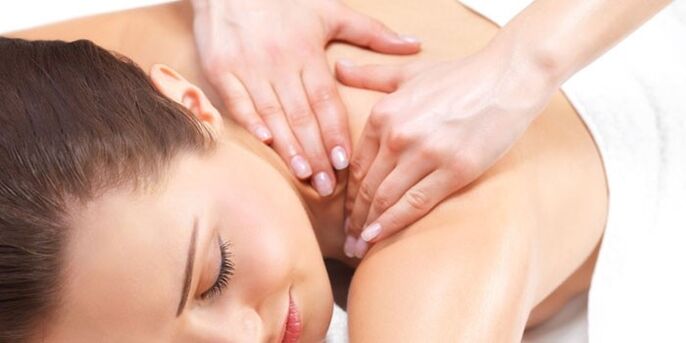
Indirect and reflex effects on muscle fibers and ligaments by massage have a beneficial effect on all parts of the spine, helping to relieve pain, improve lymph flow, blood circulation and muscle tone.Massage is indicated in the subacute or chronic stage of the disease, the technique is chosen depending on the patient's condition and the presence of additional diseases.Classic scheme:
- The patient is in a horizontal, prone position.Gently stroke the chest area from bottom to top (from the lower edge of the shoulder blades to the neck) Duration - 1 minute.
- The upper area (shoulder discharge) is treated with squeezing and kneading movements (another minute).
- On the shoulder muscles (trapezius muscle) perform stroking (8 repetitions), squeezing and rubbing (5 times each).
- The neck is stroked for one minute and again moved to the chest area in the specified order (1-2 steps).
- From the occipital bone down, the spine is rubbed (evenly spaced lines parallel to it).The duration of the stage is 1 minute.
- Then perform strokes up the spine, kneading movements and strokes again (another 2-3 minutes).
Massage of the chest, neck and spine always ends with stroking (soothing) movements.Recommended sequence of techniques: squeeze, rub, caress.If the patient's pain hardly bothers him, the number of kneading movements can be increased and the time of performing soothing movements can be reduced.Session duration is 10 minutes;in the final parts (the course includes 7-10 procedures), it is recommended to use massage movements as a basis.
During an exacerbation
Stress, physical overload, hypothermia, lifting heavy objects - these factors can turn the chronic form of the disease into acute.The main symptoms of this condition are dizziness, migraines, chest pain and difficulty breathing.Treatment includes:
- symptomatic relief with topical analgesics and analgesics for internal use;
- bed rest;
- Wear a corset to immobilize the vertebrae (if there is a hernia).
If the condition is severe, an ambulance must be called and admitted to a hospital, where the doctor will monitor the patient's condition and select the appropriate medication for the patient.
Acupuncture
Among non-traditional treatments for diseases of the musculoskeletal system and beyond, acupuncture (acupuncture) is at the forefront.It is based on the impact of thin needles on active points, each of which is a complex formation of the choroid plexus, nerve endings and connective tissue.Acupuncture helps:
- stimulates the synthesis of endogenous (endogenous) opiates - endorphins and enkephalins, which have an analgesic effect: this leads to the elimination of pain;
- Stimulates the adrenal glands to produce cortisol, which has anti-inflammatory effects;
- normalizes blood circulation;
- eliminate swelling of spinal nerves;
- improves cartilage tissue regeneration;
- reduces paraspinal muscle spasms.
Acupuncture will be effective only if you contact a qualified specialist: then you will not experience side effects, you will get quick results - relief will come after the first session.The recommended course is 10 procedures.Because the doctor often passes electric current through the needle, there may be some discomfort during the procedure, and after removing the needle, red dots remain.
Manual therapy
Based on the data obtained from the X-rays, your doctor may recommend that you begin treatment for thoracic osteoarthritis by seeing an orthopedist.The task before him is to restore blood circulation, ligamentous apparatus and functional state of the spine.Additional manual therapy sessions added to the main treatment regimen:
- helps reduce the severity of pain;
- eliminate muscle spasms;
- slow down the rate of disease development;
- Stimulates the regenerative properties of tissue cells.
In modern medicine, a new manual technique – posterior isometric relaxation (PIR) – has become particularly popular for several years.It is based on soft and gentle stretching, stimulating simultaneous contraction of the entire muscle, after which it is completely relaxed.This technique is suitable for situations where due to irregular contractions of muscle tissue, the function of the surrounding joint is disrupted, leading to limitation of its movement.
During pregnancy
The spine is subjected to heavy loads, fluctuations in hormones, water and electrolyte balance, especially from the second trimester, leading to aggravation or the appearance of osteoarthritis in pregnant women.The treatment regimen is selected exclusively by the doctor;it must include:
- wear a corset to support your back;
- choose comfortable shoes (reduces the load on the spine);
- use of topical nonsteroidal anti-inflammatory drugs;
- Perform therapeutic exercises.

Folk remedies
In addition to the main treatment regimen, you can add a number of non-traditional methods that have local and systemic effects on osteoarthritis.Most of them are allowed for use in both acute and chronic stages, but keep in mind that any remedy can cause adverse reactions related to the inoperability of each specific product.Effective options:
- Take 2 hot peppers, chop them with seeds, mix with a cup of vegetable oil.Soak in a glass container for 5 days (in a dark place).Apply, gently rubbing into the affected area, up to 2 times a day without covering anything.This ointment should not be applied to skin that has wounds or abrasions.It is not used for long-term treatment - only to treat severe pain.
- Boil a few large peeled potatoes and mash them into a puree.You can add a little butter.Distribute this volume on gauze folded three times and apply to the affected area.Cover this area with a wool scarf.The compress is kept until cool, the procedure is repeated every evening.Treatment lasts 3 weeks.
Celery root
To relieve unpleasant symptoms (pain due to muscle spasms), you can carry out a course of treatment with celery.The simplest way is to grind the peeled fresh root and press it through cheesecloth, or put it through a juicer to extract the juice.Take 1 tbsp.I.before meals 3 times a day.Treatment duration – 3 weeks.Substitution: pour 2 tbsp.I.The juice is obtained with a glass of boiling water, let stand for 2 hours.Take 1 tbsp.I.also before meals, up to 4 times a day.Treatment lasts one month.
sunflower roots
Decoctions and tinctures from sunflower roots have a good analgesic effect in any damage to the musculoskeletal system.It can be used both locally and internally;it will also be useful for the gallbladder and nervous system.Simple recipes:
- Crush the roots, pour 200 g of the resulting powder into 1.5 liters of cold water.After boiling, turn off the heat, leave for 3 hours, wrap the container in a towel.Use for compresses applied 1-2 times a day until cooled.The course of treatment is 3 weeks.
- Add 2 liters of water to 100 g of crushed sunflower roots and simmer for 10 minutes.Wait until the broth cools.Drink half a glass before meals 3-4 times a day, warm before use.The treatment course lasts 3 weeks.
Homemade ointment
Local effects on the musculoskeletal system are mainly massage and ointment, which can be prepared at home.Honey and vegetable oil are used as a base;alcohol or vodka is added to some preparations.All topical treatment products are applied to the skin without trauma in small amounts 1-2 times a day.The most effective formula:
- Combine camphor and mustard in a 1:1 ratio.
- For every 100 g of the resulting mixture, take 100 ml of wine and 100 g of egg whites (coarse, well beaten).
- Store the ointment in the refrigerator for 2 weeks, rub it into the affected area at night (take a small amount in advance to warm to room temperature), then cover your back with gauze and a woolen towel.Treatment lasts 2 weeks.